
21 Corner Dining Room Decor Ideas to Maximize Style and Space
A corner dining room can become one of the most inviting areas of your home with the right furniture, colors, lighting, and decorative accents. Whether you have a small apartment, an open-plan living space, or an unused corner beside your kitchen, thoughtful decorating can transform even the smallest area into a beautiful and functional dining spot. The key is to choose pieces that fit your available space while creating a comfortable atmosphere for everyday meals and special occasions.
From cozy breakfast nooks and built-in banquettes to elegant round tables and natural wood finishes, there are countless ways to make a corner dining area feel intentional. You do not need a large room or an expensive renovation to achieve an attractive result. Simple changes, such as adding a statement pendant light, introducing soft cushions, or placing a mirror on the wall, can make a noticeable difference.
In this guide, you will discover 21 corner dining room decor ideas that combine practicality with timeless style. Each idea includes inspiration and styling tips to help you create a dining corner that suits your home, personal taste, and available budget.
1. Create a Cozy Corner Dining Nook
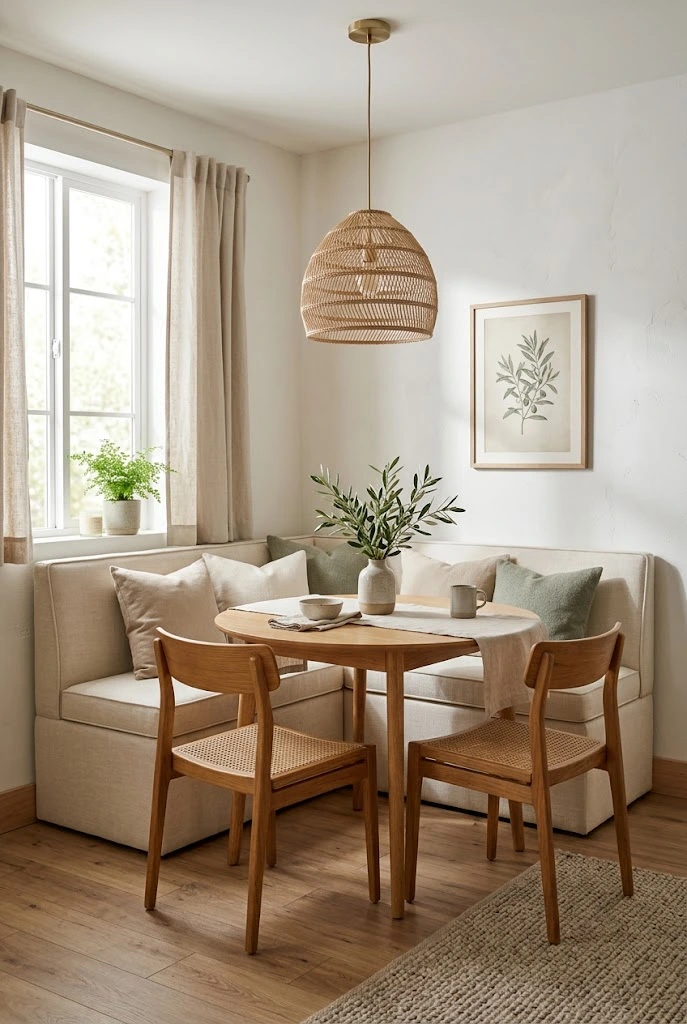
A cozy dining nook is an excellent way to turn an unused corner into a comfortable place for breakfast, casual lunches, or relaxed family dinners. Start with a small rectangular or round dining table that fits neatly against two walls without blocking the natural walking path. A built-in bench or a compact upholstered seat can provide comfortable seating while making the most of the available floor space. Warm wood finishes, cream upholstery, and soft beige walls create a welcoming atmosphere that feels calm rather than crowded.
To make the nook feel like a natural extension of your home, coordinate the seating with the surrounding decor. Add a few cushions in complementary colors, hang a framed print above the bench, and introduce a small pendant light to define the dining area. If your corner receives plenty of daylight, lightweight curtains can soften the windows without making the space feel enclosed. Even a simple arrangement can give the corner a finished, thoughtfully designed appearance.
Styling Tip: Choose cushions in two or three coordinated shades and keep the tabletop decor minimal to maintain a comfortable, uncluttered look.
2. Add a Built-In Banquette for Smart Seating
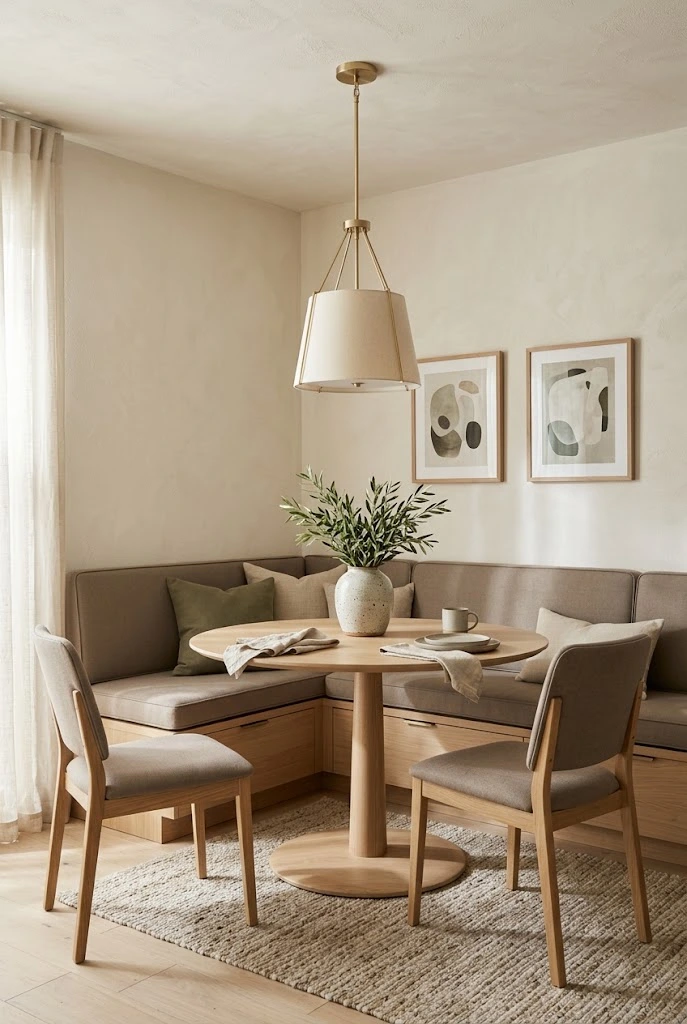
Built-in banquette seating is a practical choice for corner dining rooms because it uses wall space efficiently and can accommodate more people than several separate chairs. An L-shaped bench fits naturally into the corner, creating a defined dining area without requiring a large table footprint. Depending on your needs, the bench can feature a simple wooden base, upholstered panels, or a cushioned seat that matches your interior style. This arrangement works particularly well in kitchens, breakfast corners, and compact open-plan homes.
You can also make the banquette more functional by incorporating storage drawers or lift-up seats beneath the cushions. These hidden compartments provide space for table linens, placemats, or other dining essentials. For a polished appearance, choose upholstery that complements your walls and flooring, then introduce a few patterned pillows for visual interest. A round or oval table can soften the straight lines of the built-in seating and make movement around the corner easier.
Styling Tip: Measure the bench height and table clearance carefully before purchasing furniture so everyone can sit comfortably and move in and out without difficulty.
3. Choose a Round Dining Table for Better Flow
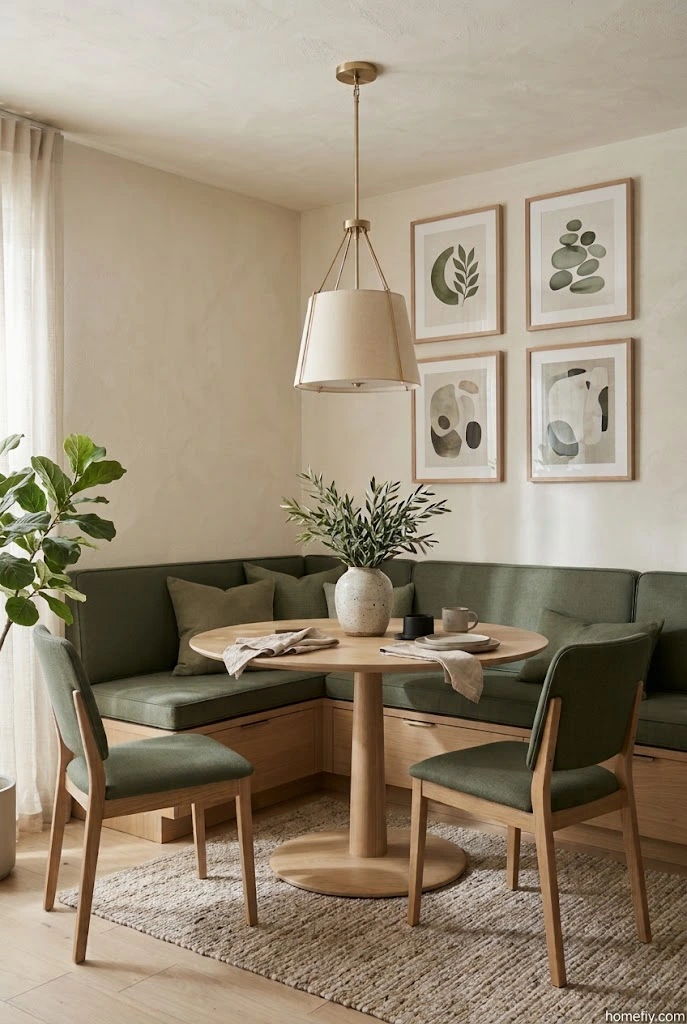
A round dining table is one of the most effective furniture choices for a corner dining area, especially when space is limited. Its curved shape eliminates sharp corners and helps people move around the table more easily. A pedestal base is particularly useful because it provides additional legroom without the visual bulk of four table legs. For a small household, a table designed for two to four people can create an intimate dining experience while leaving enough room for nearby cabinets, doors, or walkways.
Round tables also work with a wide variety of decorating styles, from traditional farmhouse interiors to contemporary apartments. A light oak table paired with upholstered chairs creates a soft, Scandinavian-inspired look, while a dark wood finish and black metal accents add a more modern character. You can complete the arrangement with a small centerpiece, a pendant light above the table, and a textured rug underneath if the available space allows.
Styling Tip: Select a table diameter that allows chairs to slide out comfortably without interfering with nearby doors or the main walking route.
4. Decorate with a Neutral Color Palette
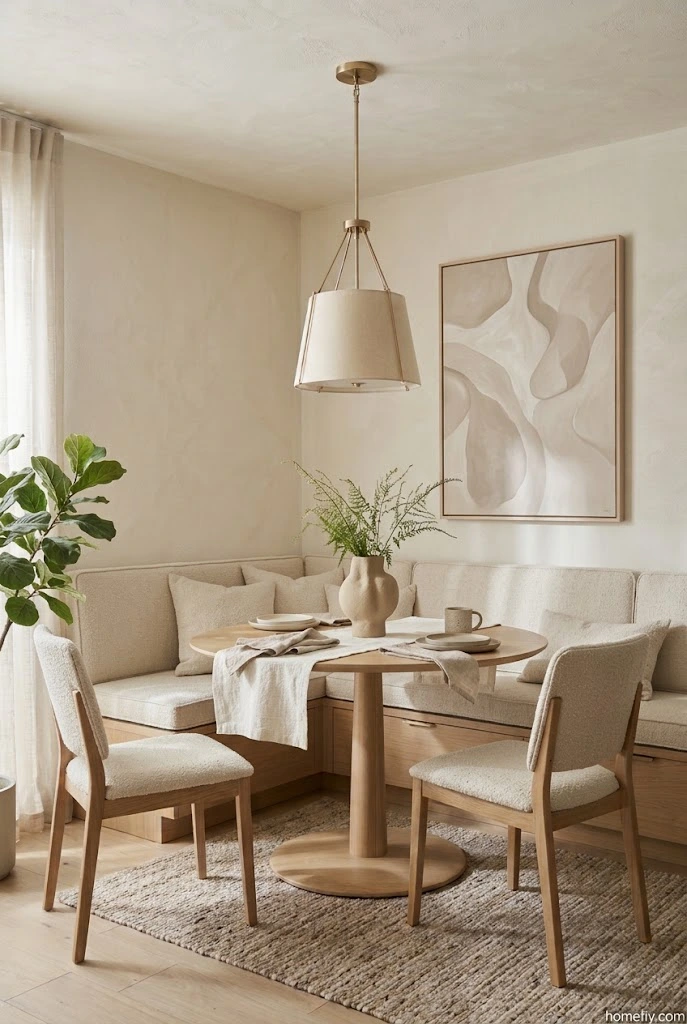
Neutral colors can make a corner dining room feel larger, brighter, and more harmonious. Shades such as warm white, ivory, oatmeal, taupe, and soft gray create a peaceful backdrop that works well in both traditional and contemporary homes. When the walls, seating, and larger furniture pieces share a coordinated palette, the corner feels less visually crowded. This approach is especially useful in small homes where the dining area connects directly to the kitchen or living room.
However, a neutral dining corner does not have to look plain. Introduce visual depth through natural materials and subtle variations in texture. A linen table runner, woven placemats, a wooden table, and ceramic accessories can make the space feel layered without adding too many colors. You can also use darker accents, such as bronze candleholders or charcoal cushions, to create contrast while preserving the overall softness of the room.
Styling Tip: Combine at least three different textures, such as wood, linen, and ceramic, to make a neutral corner feel warm and visually interesting.
5. Use a Statement Pendant Light
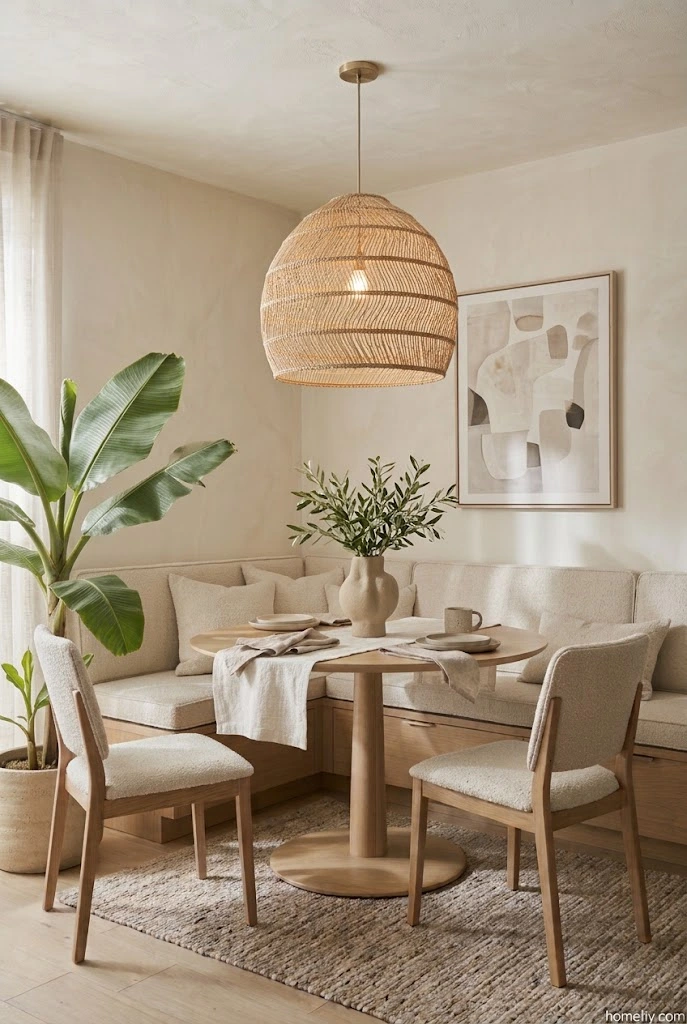
A statement pendant light can transform a simple corner dining area into a visually appealing focal point. Because dining corners are often tucked beside walls or windows, a well-positioned light helps define the area and makes it feel like a separate destination within the home. Woven pendants bring a relaxed, natural appearance, while glass fixtures feel airy and elegant. Black metal pendants offer a contemporary touch, and brass finishes can introduce warmth into a more traditional interior.
The size and placement of the fixture are important for both appearance and comfort. A light that is too large may overwhelm a small table, while one that is too small can disappear against the surrounding decor. Choose a fixture that suits the scale of your dining furniture, and use a warm-white bulb to create a pleasant atmosphere during evening meals. If the table sits in an open corner, a dimmable light can provide flexibility for breakfast, working, and entertaining.
Styling Tip: Center the pendant over the dining table rather than the entire room, and ensure it hangs high enough to avoid obstructing anyone’s view across the table.
6. Bring in Natural Wood Furniture
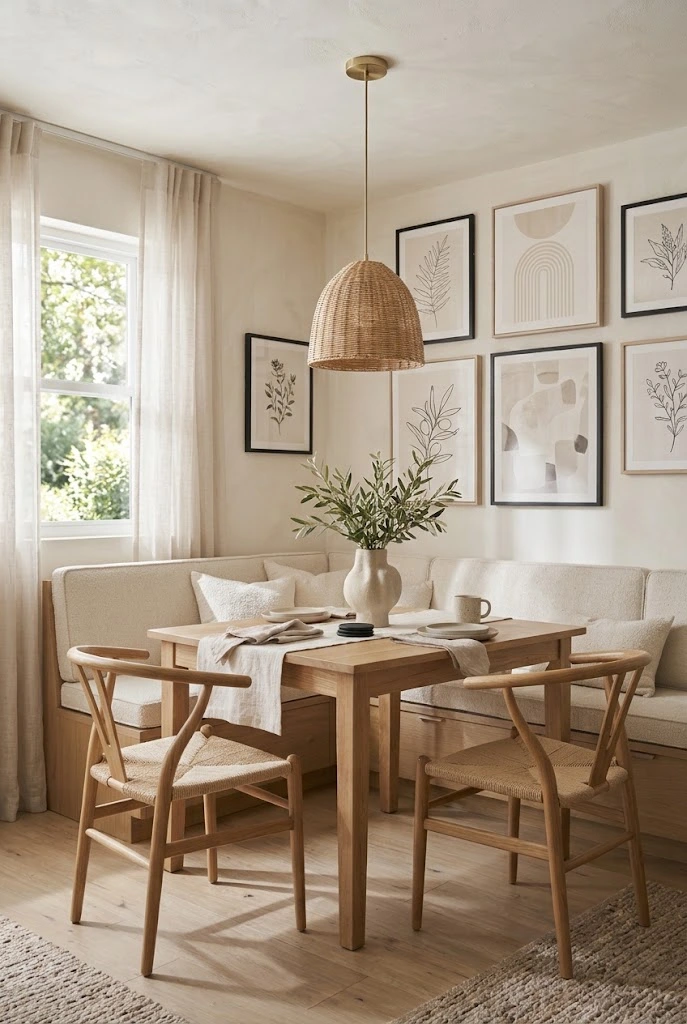
Natural wood furniture brings warmth and character to a corner dining room without requiring elaborate decoration. Oak, walnut, ash, and other wood finishes each create a slightly different mood. Pale wood is ideal for bright, airy interiors, while medium and darker finishes can make the corner feel richer and more traditional. A wooden dining table also provides a versatile foundation for different accessories, making it easy to update the look with seasonal linens, new cushions, or decorative tableware.
To keep the arrangement balanced, pair the table with chairs that complement its finish without necessarily matching it exactly. For example, an oak table can look beautiful with cream upholstered chairs or black wooden seating. Add a ceramic vase, woven placemats, or a simple linen runner to emphasize the natural character of the furniture. If the surrounding room already contains several wood finishes, repeat one of those tones in the dining corner to create a more connected interior.
Styling Tip: Limit the corner to two or three main wood tones so the furniture feels coordinated rather than visually scattered.
7. Add a Large Mirror to Open Up the Space
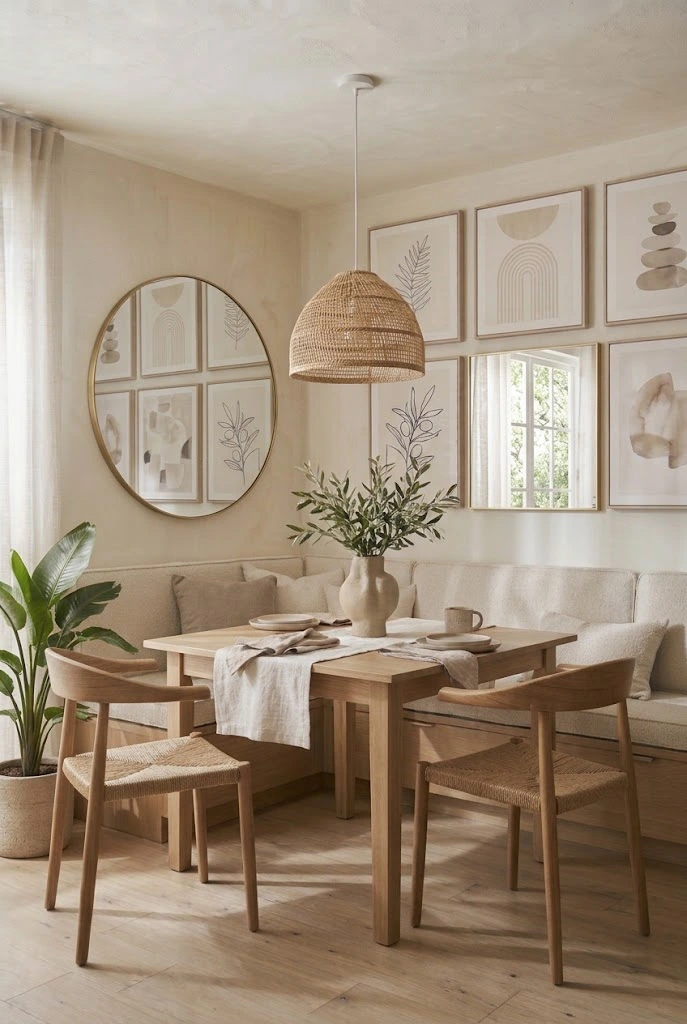
A strategically placed mirror can make a small corner dining room appear brighter and more open. Mirrors reflect available light and create a greater sense of depth, particularly when positioned opposite a window or near a light source. A large rectangular mirror can emphasize the height of the walls, while a round mirror introduces a softer shape that works beautifully with curved dining tables and upholstered seating. This simple addition can make an otherwise plain corner feel more carefully decorated.
The frame you choose also influences the overall style. A thin black frame suits contemporary interiors, while a natural wood frame complements farmhouse and Scandinavian spaces. For a more decorative look, consider a gently arched mirror or one with a warm metallic finish. Position the mirror where it reflects something attractive, such as a window, a pendant light, or a leafy plant, rather than an area filled with clutter.
Styling Tip: Before hanging the mirror, check what it will reflect from different seating positions so it enhances the dining corner instead of highlighting unwanted visual distractions.
8. Create a Farmhouse-Style Dining Corner
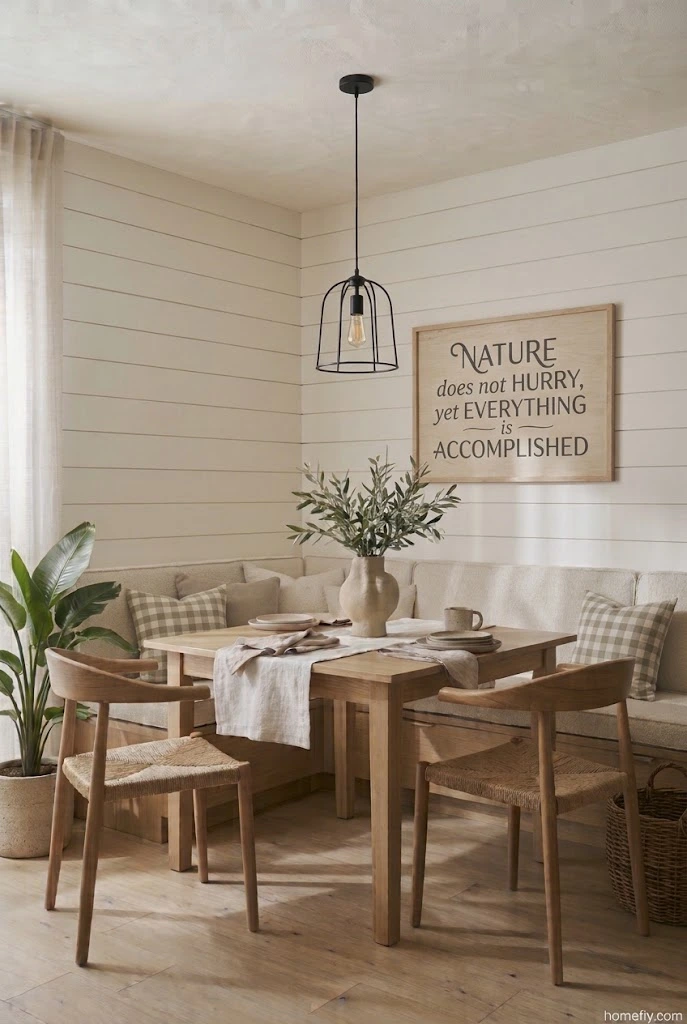
A farmhouse dining corner combines rustic materials, comfortable seating, and simple decorative details to create a relaxed atmosphere. Begin with a solid-looking wooden table, preferably in a natural, lightly distressed, or reclaimed finish. White or cream-painted bench seating can brighten the corner, while striped or checked cushions introduce a familiar farmhouse pattern. These elements work particularly well in homes with warm wood flooring, exposed beams, or traditional kitchen cabinetry, but they can also bring character to a modern apartment.
The finishing touches should feel practical rather than overly decorative. Use woven baskets for storage, ceramic pitchers as vases, and linen table runners to add softness. A small framed landscape print or a modest wall shelf can provide interest without overwhelming the space. If you prefer a more updated farmhouse look, combine rustic wood with simple black hardware, clean-lined chairs, and a neutral color scheme.
Styling Tip: Choose one or two rustic statement pieces and balance them with clean, uncluttered surfaces to keep the farmhouse look fresh.
9. Use Upholstered Chairs for Everyday Comfort
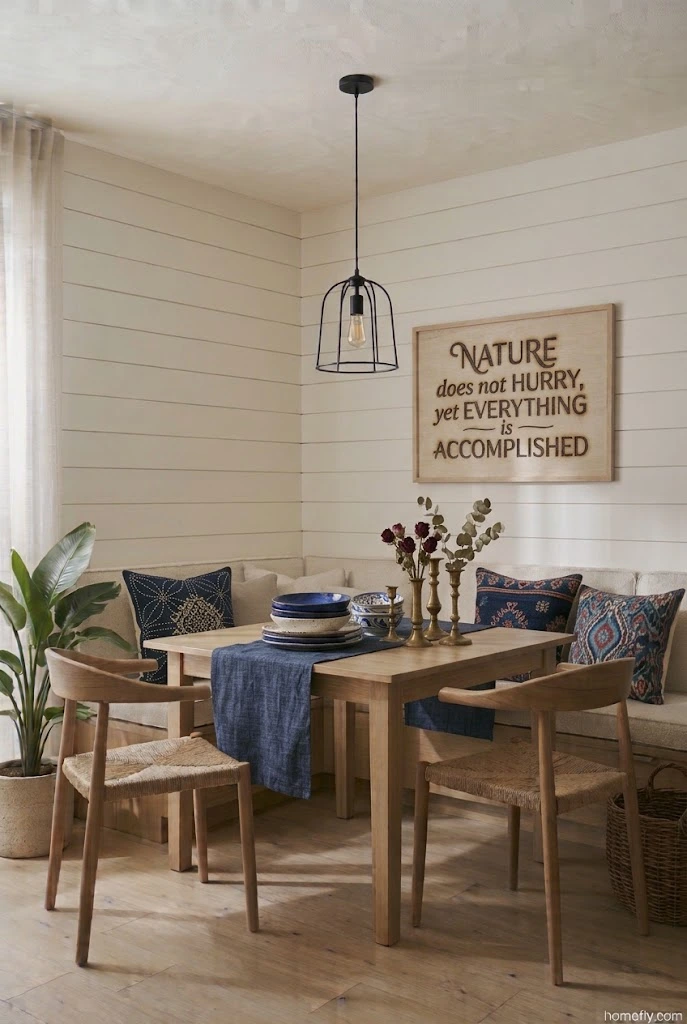
Upholstered chairs can make a corner dining room feel more comfortable and sophisticated. Unlike hard wooden seats, padded chairs provide additional support for longer meals, conversations, or casual work sessions at the dining table. Linen-look fabric creates a relaxed appearance, velvet adds richness, and textured neutral upholstery works well in a wide range of interiors. In a small corner, chairs with slim legs and relatively compact backs can deliver comfort without making the area feel too heavy.
Color coordination is another way to make upholstered chairs part of the overall design. Beige and cream seating blends easily with neutral walls, while olive green, muted blue, or warm terracotta can add a subtle accent. If you already have a bench along one wall, using upholstered chairs on the opposite side creates an inviting combination of seating styles. Consider durable, easy-to-clean fabrics if the dining corner is used frequently by children or pets.
Styling Tip: Test the chair width and seat depth before buying, and leave enough room behind the chairs for people to sit down and stand up comfortably.
10. Add Floating Shelves Above the Dining Area
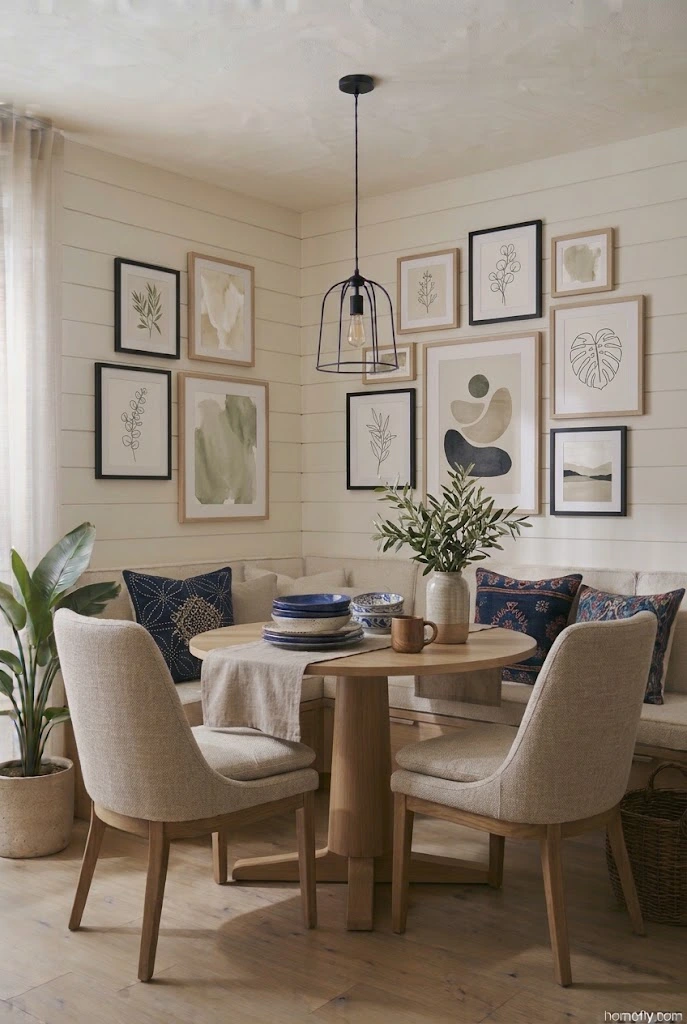
Floating shelves provide a useful way to decorate the walls above a corner dining table without taking up valuable floor space. They can hold small decorative objects, everyday dishes, cookbooks, framed prints, or a few carefully chosen plants. In a dining corner next to the kitchen, the shelves can also make frequently used items easy to reach. Natural wood shelves introduce warmth, while white shelves blend into pale walls and black shelves create a stronger contemporary contrast.
The key is to keep the arrangement organized and visually balanced. Instead of filling every shelf with small objects, mix a few larger pieces with open space between them. For example, place a stack of ceramic bowls beside a framed print, then add a small plant at one end. If the corner already features a statement pendant or a patterned wall, keep the shelf decor relatively simple so the different elements do not compete for attention.
Styling Tip: Secure shelves properly to the wall and avoid positioning heavy or breakable objects directly above seating where they could fall onto someone.
11. Introduce Greenery for a Fresh Atmosphere
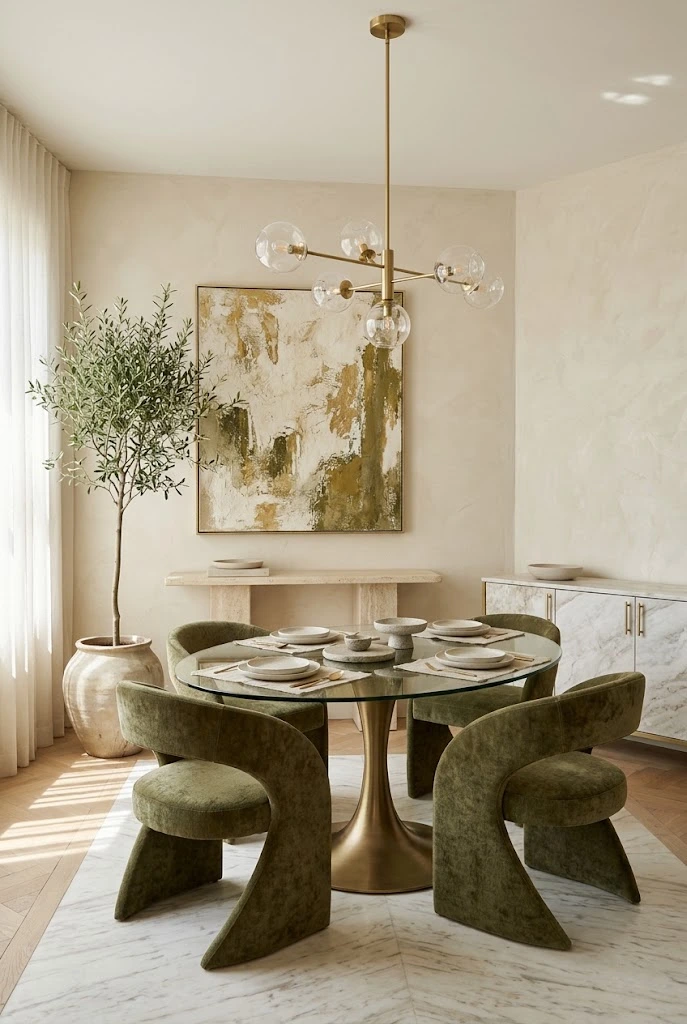
Plants can bring life and freshness to a corner dining room, especially when the area feels plain or lacks natural color. A taller floor plant can soften an empty corner beside the table, while a small potted plant or herb arrangement can create a simple centerpiece. If your dining nook receives good sunlight, consider suitable herbs or other light-loving plants near the window. For lower-light corners, select varieties that tolerate those conditions and adjust their placement according to their care requirements.
Greenery also works well with a variety of decorating styles. A leafy plant in a woven basket complements farmhouse and bohemian interiors, while a simple plant in a matte ceramic pot suits modern spaces. You can repeat green tones through cushions, artwork, or table linens to make the arrangement feel more cohesive. Just remember that the dining table should remain functional, with enough room for plates, serving dishes, and everyday activities.
Styling Tip: Use one medium or tall plant as the main green accent, then add smaller plants only if the available surface space allows.
12. Make the Most of a Window Corner
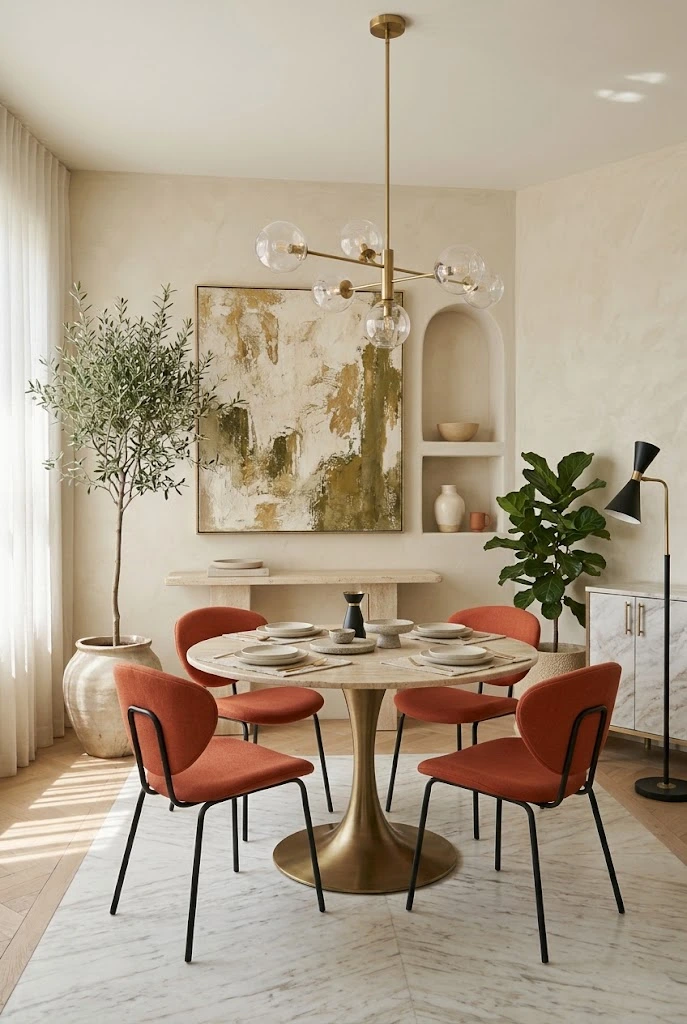
A corner beside a window is an ideal place for a dining area because natural light can make the space feel inviting throughout the day. Positioning the table near the window allows you to enjoy outdoor views during breakfast or lunch while making a small corner feel more open. If the layout permits, an L-shaped bench beneath two adjoining windows can create a charming breakfast nook. Otherwise, a small table with two chairs can provide a simpler solution without requiring built-in furniture.
Window treatments can help complete the design while preserving the light. Sheer curtains soften strong daylight, while Roman shades provide a neat appearance and more privacy when needed. Choose fabrics that coordinate with the dining chairs and cushions, and avoid heavy drapes if they would crowd the seating area. A narrow windowsill can also accommodate a small plant or a simple decorative object, provided it does not obstruct the window or make cleaning difficult.
Styling Tip: Keep the window area visually light and measure the table placement carefully so chairs do not interfere with curtains, blinds, or window operation.
13. Try a Two-Tone Dining Room Design
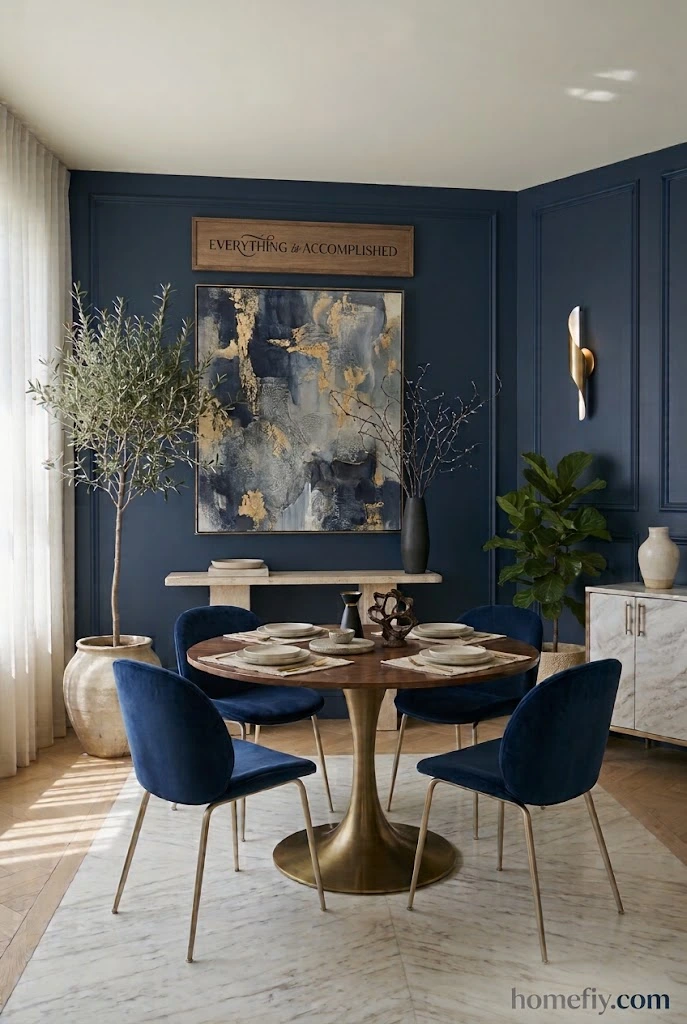
A two-tone color scheme can give a corner dining room more definition without requiring expensive wall treatments. Painting the lower portion of the wall in a deeper shade and keeping the upper portion light creates a subtle architectural effect. Soft sage paired with warm white feels natural, dusty blue with ivory looks calm, and charcoal with pale gray creates a more dramatic contemporary setting. This approach can also help visually distinguish the dining corner from an adjoining kitchen or living area.
The furniture and accessories should connect the two wall colors. A natural wood table can bridge warm and cool shades, while neutral chairs help maintain balance. You might repeat the darker wall color in a cushion, a framed print, or a pendant light to make the palette feel intentional. For renters or anyone avoiding permanent changes, removable wallpaper or carefully placed artwork can create a similar sense of distinction.
Styling Tip: Test paint samples under both daylight and evening lighting before committing to a two-tone design.
14. Incorporate a Small Dining Bench
A freestanding dining bench is a flexible alternative to built-in seating when you want to maximize a corner without committing to a renovation. A bench can be pushed close to the wall when not in use and moved when extra seating is needed. This makes it particularly useful in apartments, breakfast corners, and multipurpose rooms where furniture arrangements may change over time. A narrow wooden bench provides a clean, practical appearance, while an upholstered version offers a softer and more comfortable feel.
You can coordinate the bench with the dining table for a traditional look or mix materials for a more contemporary result. For example, a wooden table paired with a cream upholstered bench creates a balanced combination of warmth and softness. Cushions can introduce color, but avoid using too many loose accessories if the bench needs to remain easy to move or clean. If storage is limited, a bench with a shelf or concealed compartment may provide additional functionality.
Styling Tip: Choose a bench that fits beneath the table when not in use, and check that its depth allows diners to sit comfortably without pressing against the wall.
15. Decorate with Wall Art and Framed Prints
Wall art is an easy way to give a corner dining room personality without taking up space on the table. A single large print can create a strong focal point, while two or three coordinated frames can form a small gallery wall. Botanical illustrations, abstract shapes, landscapes, and minimalist line drawings are all suitable options, depending on the style of your home. Choose artwork that complements the colors already present in the room so the dining corner feels connected to the surrounding interior.
The scale and placement of the artwork matter as much as the design itself. A tiny frame can look lost above a long bench, whereas an oversized piece may overwhelm a narrow wall. Align the artwork with the dining furniture rather than positioning it randomly within the entire wall. If you prefer a more personal display, combine framed photographs with a few prints using similar frame finishes to create a cohesive arrangement.
Styling Tip: Keep the artwork centered over the bench or table area, and use a consistent frame color to make multiple pieces look organized.
16. Embrace a Modern Minimalist Corner
A minimalist corner dining room focuses on clean lines, practical furniture, and a carefully edited selection of accessories. This approach is especially effective in small spaces because fewer visual distractions make the corner feel more open. Choose a table with a simple silhouette, chairs with slim profiles, and a restrained palette of white, beige, gray, or natural wood. Avoid bulky cabinets and unnecessary decorative items that reduce the amount of usable space around the dining furniture.
Minimalism does not mean that the room must feel cold or empty. Natural wood, textured upholstery, soft lighting, and a single piece of artwork can add warmth while preserving the uncluttered appearance. A ceramic vase or a small bowl can provide a finishing touch without creating unnecessary visual noise. By prioritizing quality, proportion, and function, you can create a dining corner that looks polished and remains easy to maintain.
Styling Tip: Keep only a few decorative objects on display and make sure every furniture piece serves a clear purpose.
17. Add a Touch of Black for Modern Contrast
Black accents can add definition to a corner dining room, particularly when the surrounding palette consists of light neutrals. A black metal pendant, slim chair frames, or dark picture frames create contrast without requiring a major change to the room. This approach works well in contemporary, industrial, Scandinavian, and transitional interiors. When used thoughtfully, black details can make pale walls and natural wood finishes appear more distinctive.
The trick is to repeat the accent in a few places rather than introducing too many unrelated dark elements. For instance, black dining chair legs can coordinate with a pendant light and a framed print. If the room is particularly small, keep the larger surfaces light and reserve black for the details. This preserves the brightness of the corner while giving the design a more structured appearance.
Styling Tip: Repeat black in two or three small details, and balance those accents with light-colored walls, natural textures, or reflective surfaces.
18. Create a Scandinavian-Inspired Dining Corner
Scandinavian-inspired design is a natural fit for corner dining rooms because it emphasizes simplicity, functionality, and comfortable materials. Start with pale wood furniture, light walls, and chairs with clean, uncomplicated shapes. A compact round or rectangular table keeps the arrangement practical, while soft textiles add warmth. This style is particularly appealing for homes where the dining area shares space with a kitchen or living room because its understated palette makes the transition between zones feel seamless.
To give the corner more character, introduce a few thoughtful accessories rather than filling the space with decorations. A linen runner, a simple pendant, a small ceramic vase, or a framed botanical print can complete the arrangement. Soft gray, muted green, and warm beige work beautifully alongside pale wood. During darker months, warm lighting and comfortable cushions can make the dining area feel inviting without changing its simple aesthetic.
Styling Tip: Combine pale wood with warm white and one muted accent color to achieve a balanced Scandinavian look.
19. Use a Rug to Define the Dining Corner
A rug can visually separate a corner dining area from the rest of an open-plan room without requiring walls or partitions. It provides a clear foundation for the table and chairs, helping the dining arrangement feel intentional. A neutral flatweave rug works well in contemporary interiors, while a subtle geometric pattern can introduce interest without dominating the room. In a compact home, this simple addition can help distinguish the dining area from an adjoining living space.
Practicality is important when selecting a dining rug. Food crumbs and spills are common around dining tables, so choose a material that is easy to clean and suitable for your household. Flatwoven designs generally make it easier to move chairs than thick, high-pile rugs. The rug should also be large enough that the chair legs remain on it when people pull their seats away from the table. If the corner is too small for a properly sized rug, leaving the floor uncovered may be the better option.
Styling Tip: Measure the table and chairs in their pulled-out position before purchasing a rug, and choose a low-pile or flatwoven design for easier maintenance.
20. Bring in Elegant Metallic Accents
Metallic accents can introduce a refined touch to a corner dining room without making the design feel overly formal. Brass, brushed gold, and bronze finishes bring warmth, while polished chrome and brushed nickel create a cooler, more contemporary effect. You can introduce these materials through a pendant light, chair legs, cabinet hardware, a mirror frame, or small tabletop accessories. In a neutral dining corner, even a few metallic details can add dimension and make the arrangement feel more finished.
For the most cohesive result, choose one primary metallic finish and repeat it throughout the corner. For example, brass lighting can coordinate with a small decorative bowl and a mirror frame, while black metal furniture can provide contrast. Metallic details look especially attractive when paired with natural wood, linen, marble-look surfaces, or soft upholstery. Keep the overall arrangement simple so the reflective accents complement the dining furniture instead of competing with it.
Styling Tip: Use metallic finishes sparingly and repeat the same tone in two or three places for a polished, coordinated appearance.
21. Style the Corner with Seasonal Decor
Seasonal decor allows you to refresh a corner dining room without replacing furniture or changing the entire color scheme. In spring, fresh flowers and light table linens can create an airy atmosphere. Summer arrangements might feature greenery, woven placemats, and simple ceramic accessories. During autumn, introduce warm rust, muted orange, and deep green through a runner or a small centerpiece. For winter, evergreen branches, soft candlelight, and textured fabrics can make the corner feel especially inviting.
The easiest way to change the look is to focus on a few removable details. Swap cushion covers, replace the table runner, or create a small centerpiece that reflects the season. Keep the larger furniture pieces and foundational colors relatively consistent so every update feels connected to the overall design. This method is budget-friendly and allows the dining corner to evolve throughout the year while remaining practical for everyday use.
Styling Tip: Choose one seasonal centerpiece and one or two coordinating textiles instead of covering every surface with decorations.
Final Thoughts on Corner Dining Room Decor
Decorating a corner dining room is all about finding the right balance between comfort, functionality, and visual appeal. Whether you prefer a cozy breakfast nook, a built-in banquette, a modern minimalist arrangement, or a rustic farmhouse look, the best design is one that suits your space and supports the way you live. Start with furniture that fits comfortably, establish a cohesive color palette, and add lighting and accessories that give the corner its own identity.
You do not need to implement all 21 ideas at once. Even a few thoughtful changes, such as introducing a round table, adding a mirror, choosing comfortable seating, or styling the wall with artwork, can make a noticeable difference. Pay attention to the walking space around the table and avoid overcrowding the area with decorative objects.
Ultimately, a well-designed corner dining room should feel like a natural part of your home rather than an afterthought. With the right combination of practical furniture, warm materials, and personal details, you can turn an overlooked corner into a beautiful place to enjoy everyday meals, meaningful conversations, and special moments with family and friends.