
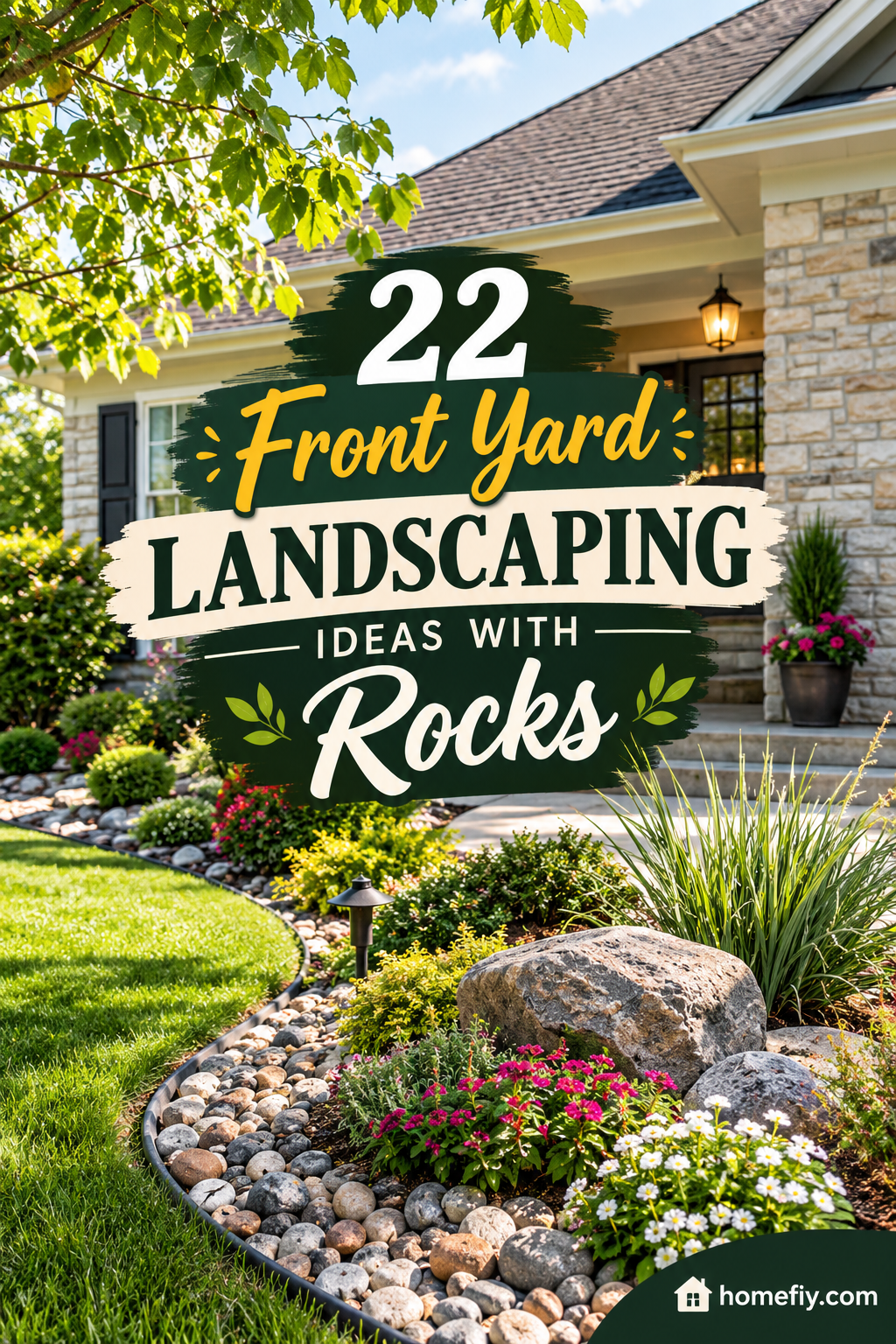
22 Front Yard Landscaping Ideas with Rocks Beautiful Designs to Transform Your Curb Appeal
Your front yard is the first thing people notice about your home, and the right landscaping can make it feel welcoming, stylish, and well-maintained. If you want to improve your home’s curb appeal without spending a fortune on complicated garden designs, front yard landscaping ideas with rocks offer a beautiful and practical solution. From decorative river rocks and natural boulders to elegant white stones and colorful rock gardens, there are countless ways to create an outdoor space that reflects your personal style.
One of the biggest advantages of rock landscaping is its versatility. Rocks can complement modern, rustic, traditional, and minimalist homes while helping define flower beds, create attractive pathways, and fill empty spaces around trees and foundations. When combined with suitable plants, ornamental grasses, and decorative edging, they can transform even a small front yard into an eye-catching landscape. Explore these inspiring rock landscaping ideas to discover designs that balance beauty, functionality, and manageable maintenance.
1. Front Yard Landscaping with Decorative River Rocks
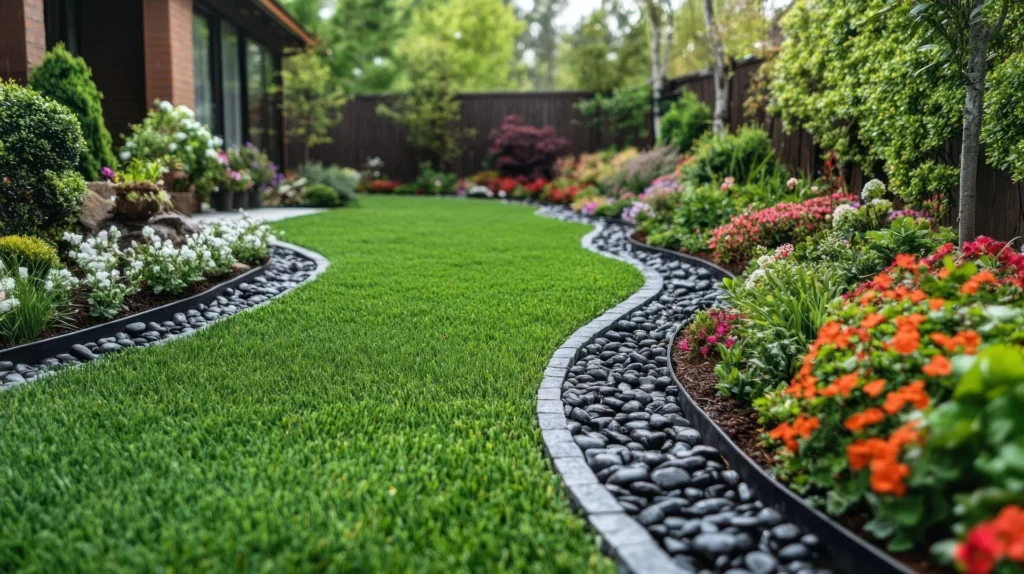
Decorative river rocks are an excellent choice for homeowners who want a natural, polished look without relying entirely on grass or traditional mulch. These smooth stones come in different sizes and earthy shades, including gray, tan, cream, brown, and charcoal. Their rounded shapes create a softer appearance than sharp-edged gravel, making them especially attractive around flower beds, along garden borders, and beside front walkways. River rocks can also help visually connect different landscaping features, creating a cohesive design that makes your front yard feel thoughtfully planned.
For an attractive arrangement, combine river rocks with evergreen shrubs, ornamental grasses, or colorful flowering plants. Larger stones can define the edges of a planting area, while smaller pebbles fill the remaining space for a neat finish. Before placing the rocks, prepare the soil and consider using suitable landscape fabric where weed suppression is needed. Remember that river rocks do not improve soil like organic mulch, and they can retain heat in sunny locations. Leave enough room around plant stems to support healthy growth and avoid piling stones directly against your home’s foundation.
Styling tip: Choose two complementary rock colors instead of mixing many shades. For example, pair light gray river rocks with dark green shrubs and white flowering plants for a clean, timeless front yard design.
2. Modern Front Yard Landscaping with Large Rocks and Boulders
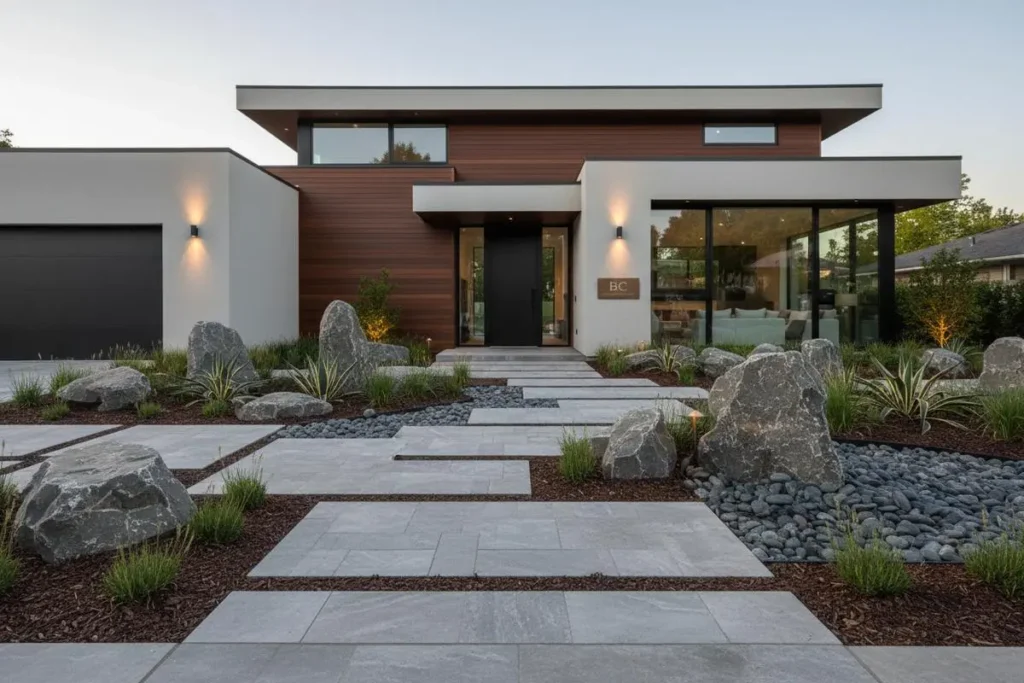
Large rocks and decorative boulders can give a modern front yard a bold, architectural appearance. Rather than filling every available space with small stones, this design focuses on a few statement pieces arranged among gravel, low-growing plants, and simple geometric planting beds. Natural boulders create visual interest through their irregular shapes and textures, while their substantial size helps anchor the overall landscape. This approach works particularly well with contemporary homes featuring clean lines, neutral exterior colors, large windows, or minimalist architectural details.
To create a balanced arrangement, place boulders in small groups rather than spacing them evenly throughout the yard. Use a mixture of stone sizes to create depth, and partially set larger rocks into the ground so they appear naturally embedded in the landscape. Pair them with architectural plants such as ornamental grasses, compact evergreen shrubs, or carefully positioned succulents suited to your climate. If you are installing especially large boulders, consider professional placement to ensure they are stable and do not create drainage or safety problems.
Styling tip: For a sophisticated modern look, combine charcoal or gray boulders with pale gravel, black metal edging, and a limited selection of green plants. Keep the arrangement uncluttered so each stone becomes a focal point.
3. Small Front Yard Landscaping Ideas with Rocks
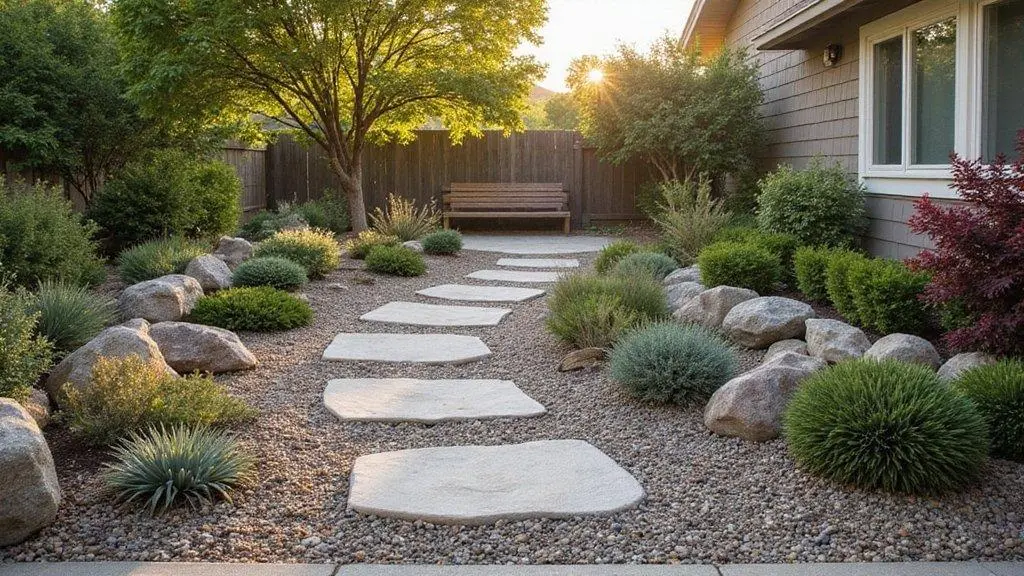
A small front yard can look attractive and spacious when rocks are used strategically. Instead of filling the entire area with numerous plants and decorations, divide the space into a few purposeful zones. Decorative gravel can cover open ground, while a narrow rock border frames the walkway or foundation planting. Compact shrubs, low-growing ground covers, and a small ornamental tree can provide greenery without overwhelming the available space. Light-colored stones may also brighten shaded areas and create a visually open appearance, especially when paired with a simple pathway and tidy planting beds.
The key to successful small front yard landscaping is choosing materials and plants that complement the scale of your home. Oversized boulders, excessive color combinations, and bulky garden ornaments can make a compact area feel crowded. Instead, repeat the same rock type throughout the design to create continuity. Use vertical interest from slender ornamental grasses or narrow evergreen plants, and keep pathways clear for easy access to the front entrance. If your yard receives limited sunlight, select shade-tolerant plants rather than relying on sun-loving varieties that may struggle.
Styling tip: Use one main rock color, a narrow planting bed, and a simple stepping-stone path. This coordinated approach creates a clean, spacious look without requiring a large landscaping budget.
4. Low-Maintenance Front Yard Rock Garden Ideas
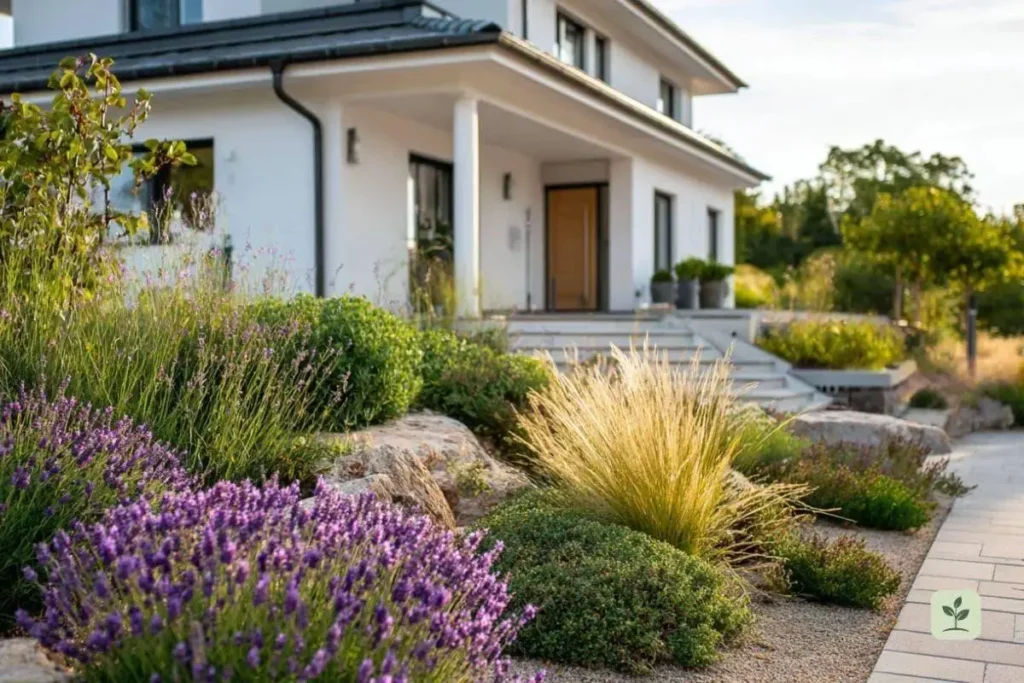
A low-maintenance rock garden is ideal for homeowners who want attractive landscaping without constant mowing, trimming, or replacing organic mulch. By combining decorative stones with hardy plants suited to local growing conditions, you can create a front yard that remains visually appealing throughout much of the year. Gravel, crushed stone, and larger decorative rocks can provide a structured base, while evergreen shrubs, drought-tolerant perennials, and ornamental grasses add texture and seasonal interest. This style is especially useful in areas where maintaining a traditional lawn is difficult or water conservation is important.
Although rock gardens can reduce certain landscaping chores, they are not completely maintenance-free. Weeds may still grow between stones, leaves can collect among gravel, and some plants will need occasional pruning or watering. Good preparation makes a significant difference: remove existing weeds, improve the soil where plants will grow, and establish a clear border around the rock-covered areas. Choose plants according to your local climate and sunlight conditions, and avoid placing water-sensitive plants in spots where rainwater regularly collects.
Styling tip: Combine three elements for a balanced design: one dominant gravel color, a few larger accent rocks, and groups of hardy plants. Repeating these elements throughout the front yard creates a polished look with less visual clutter.
5. Front Yard Landscaping with Rocks and Mulch
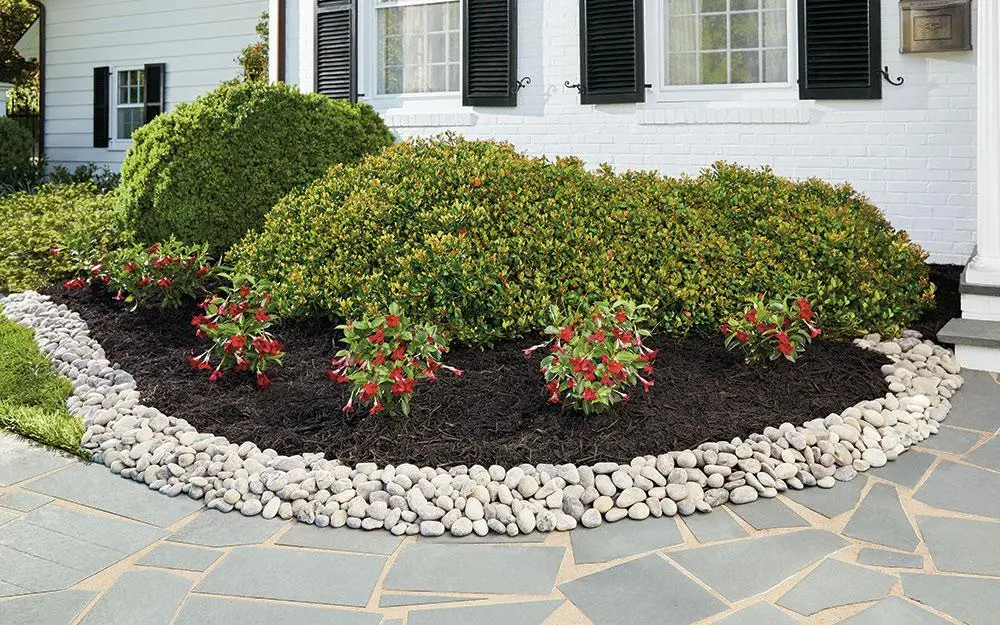
Combining rocks and mulch is an effective way to add contrast and create separate zones in your front yard. Rocks provide a durable decorative surface around pathways, edging, and areas where you want a permanent stone feature. Organic mulch, such as shredded bark or wood chips, works well around shrubs, trees, and flower beds because it gradually decomposes and contributes organic matter to the soil. Using both materials allows you to enjoy the clean appearance of rock landscaping while maintaining planting areas that benefit from organic ground cover.
For a coordinated design, use rocks to outline the edges of garden beds and apply mulch inside the planting areas. For example, a border of smooth gray stones can frame a bed filled with dark brown mulch, green shrubs, and seasonal flowers. Keep the two materials separated with sturdy edging to prevent them from mixing over time. Avoid piling either material against tree trunks or the home’s siding, and direct water away from the foundation. The goal is to create a functional arrangement in which each material serves a clear purpose.
Styling tip: Pair dark mulch with pale river rocks for strong contrast, or use warm brown stones with natural wood mulch for a softer, rustic appearance. Repeat the same combination near the entrance to create a unified landscape.
6. Beautiful Rock Borders Along Front Yard Flower Beds
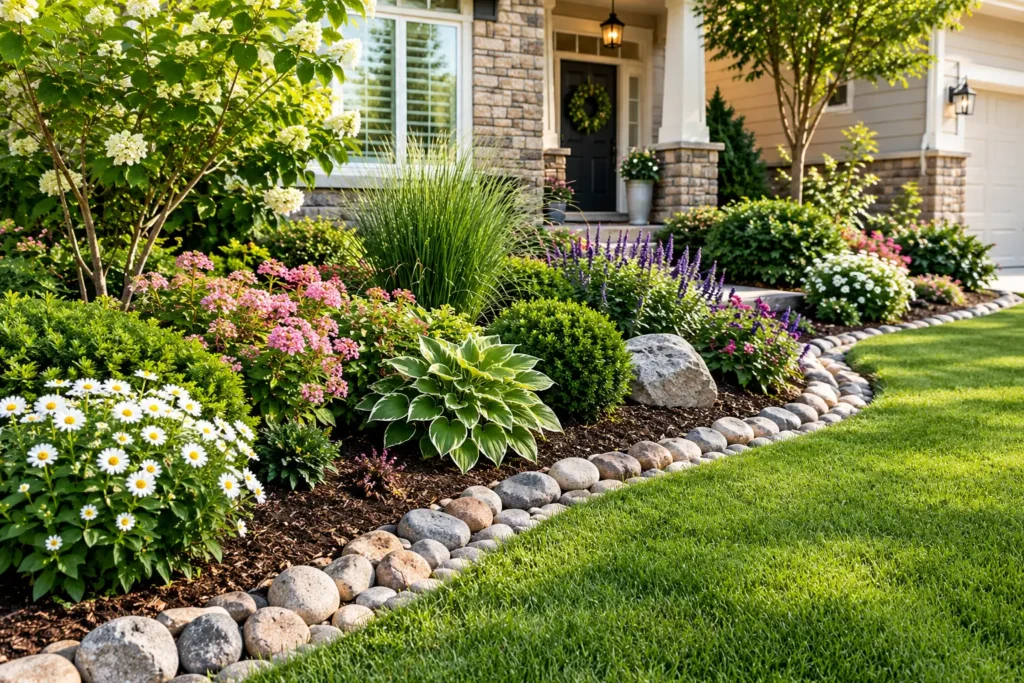
Rock borders are a simple way to make front yard flower beds look organized and professionally finished. They create a visible separation between planting areas and surrounding lawns, gravel, or walkways. Depending on your preferred style, you can use small river stones, flat natural rocks, chunky limestone pieces, or neatly arranged decorative boulders. A curved border can soften the appearance of a traditional garden, while straight lines create a more contemporary look. Rock edging is particularly useful when you want to emphasize the shape of a flower bed without adding elaborate structures.
When designing your border, consider the height and scale of the stones in relation to the plants. Low, flat stones work well around small flowers and ground covers because they do not block the view of the planting bed. Larger stones can complement taller shrubs, ornamental grasses, and layered perennial gardens. Prepare a stable base before placing the rocks, especially if the border follows a slope or sits beside a frequently used walkway. Arrange the stones securely and leave enough room for plants to grow without spreading over the entire border.
Styling tip: Create a gently curved rock border around a flower bed and fill it with a combination of low evergreen plants and seasonal blooms. Repeating one stone type throughout the border keeps the design cohesive and visually appealing.
7. Front Yard Landscaping with White Rocks and Green Plants
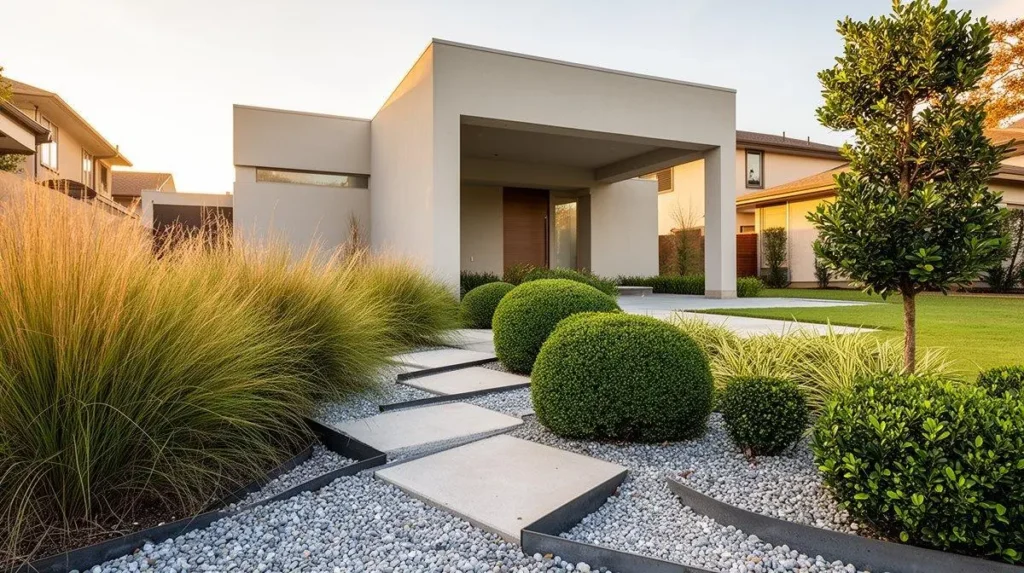
White rocks can give your front yard a bright, fresh appearance while highlighting the natural colors of surrounding plants. White marble chips, pale decorative gravel, and light-colored pebbles create a striking contrast against deep green foliage. They work particularly well in modern landscapes, narrow foundation beds, and small front yards that need a brighter visual finish. When sunlight reaches the stones, their reflective surface can make the garden appear lighter and more open. White rocks also pair beautifully with homes featuring gray, beige, white, or other neutral exterior finishes.
To prevent the design from looking too stark, soften the white stone areas with a variety of plant textures. Compact evergreen shrubs, ornamental grasses, leafy ground covers, and carefully selected flowering plants can create a balanced combination of colors. You might also introduce a few darker accent stones to add depth and avoid a flat appearance. White stones can show dirt, fallen leaves, and discoloration more readily than darker materials, so consider the amount of maintenance you are willing to do before covering large areas. Keep the stones away from plant crowns and ensure the planting beds drain properly.
Styling tip: Use white decorative stones around dark green shrubs and add a few black or charcoal accents for a modern, high-contrast landscape. Keep the planting palette simple to make the stone color stand out.
8. Drought-Tolerant Front Yard Landscaping with Rocks
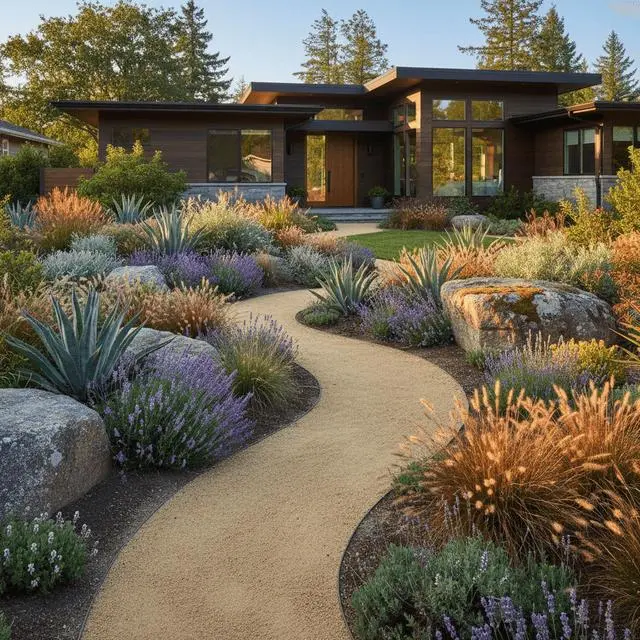
Drought-tolerant rock landscaping is a practical choice for regions with hot summers, limited rainfall, or water restrictions. Instead of maintaining a large lawn, you can use gravel, decorative stones, and carefully selected plants to create an attractive landscape that needs less supplemental watering once established. Depending on your climate, suitable plants may include lavender, certain ornamental grasses, agave, yucca, or locally adapted native perennials. The combination of varied stone textures and resilient greenery gives the yard a natural appearance while reducing the need for frequent lawn care.
Successful drought-tolerant landscaping begins with selecting plants suited to your specific conditions. A plant that thrives in a dry desert climate may not perform well in a humid region with heavy rainfall. Group plants with similar water requirements together, improve drainage where necessary, and water new plantings until their roots are established. Use rocks to cover appropriate open areas, but do not assume that every plant benefits from a layer of stones. In very hot locations, stone surfaces can become warm, so keep heat-sensitive plants away from exposed gravel and provide shade where needed.
Styling tip: Create a layered arrangement with medium-sized boulders, warm-toned gravel, and groups of climate-appropriate drought-tolerant plants. Repeating plant varieties in small clusters creates a natural look without making the yard feel crowded.
9. Front Yard Landscaping Ideas with Rocks Around Trees
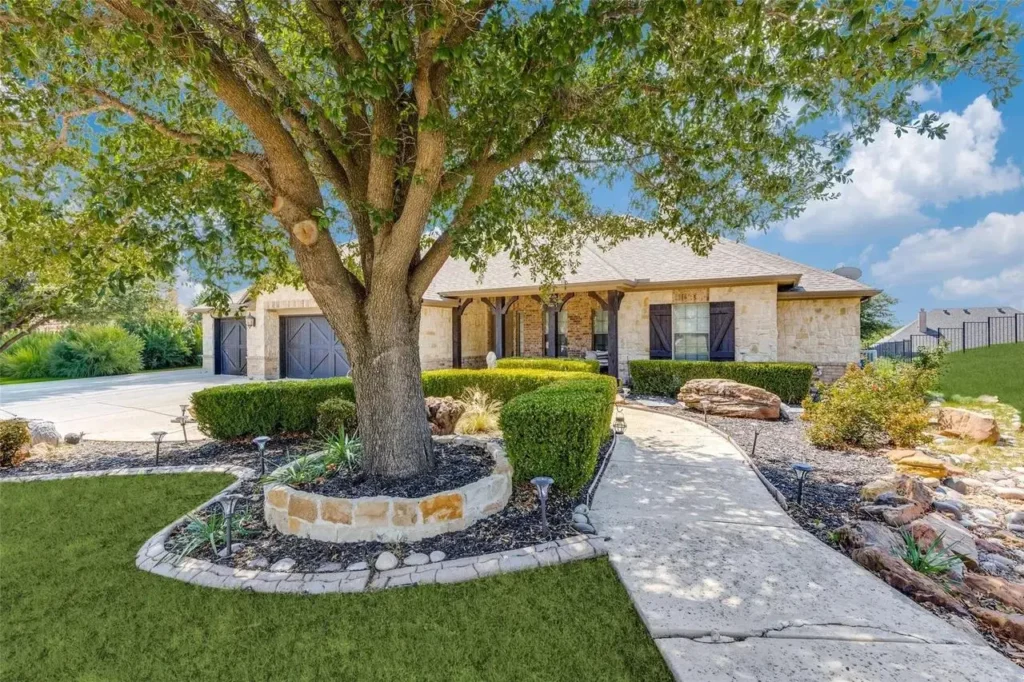
Landscaping around trees with rocks can help define the planting area and create a more finished appearance in your front yard. A carefully arranged stone border can highlight a mature shade tree, an ornamental tree near the entrance, or a small flowering tree planted in the lawn. Smooth river stones and natural rock edging work well with a variety of home styles, from rustic cottages to modern properties. You can also combine stones with shade-tolerant ground covers or small plants where conditions allow, adding color and texture beneath the tree canopy.
However, tree roots need sufficient access to air, water, and nutrients, so the design should prioritize the tree’s health. Avoid piling soil, gravel, or rocks deeply around the trunk, and never create a raised stone mound that covers the root flare. A shallow decorative border placed away from the trunk is generally a better approach than surrounding the tree with a thick layer of stones. Consider leaving much of the root zone uncovered or using a suitable organic mulch where appropriate. Keep heavy boulders away from major surface roots to reduce the risk of damage.
Styling tip: Arrange medium-sized stones in a broad, irregular circle around the tree, leaving generous space between the trunk and the decorative border. Add a few shade-tolerant plants around the outer edge for a natural, balanced finish.
10. Japanese-Inspired Front Yard Rock Garden Designs
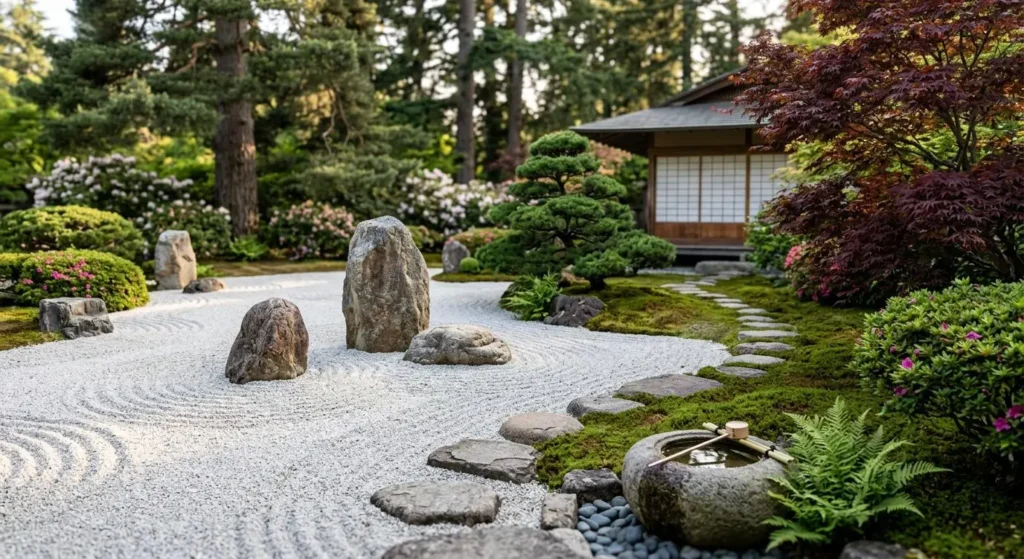
Japanese-inspired rock gardens offer a calm, balanced appearance that works beautifully in front yards where simplicity and natural textures are important. These designs often feature carefully positioned stones, gravel, restrained greenery, and open space rather than dense flower beds. Each element has a clear visual purpose, creating a landscape that feels peaceful instead of cluttered. You can adapt this style to a modern home by combining pale gravel, dark accent rocks, compact evergreen plants, and a simple stepping-stone path. The result is a refined outdoor space that emphasizes form, texture, and thoughtful placement.
To achieve this look, start with a limited selection of materials and avoid filling every empty space with decorations. Place stones in small, asymmetrical groups that appear natural, and use gravel to create a clean background. Carefully selected plants, such as suitable evergreen shrubs, moss in favorable conditions, or compact ornamental grasses, can soften the hard surfaces. If you want to incorporate raked gravel patterns, choose an area protected from heavy foot traffic and wind. Traditional Japanese gardens have specific cultural and design principles, so a thoughtful, restrained interpretation is more effective than simply adding random rocks and ornaments.
Styling tip: Use three main elements: natural stones, pale gravel, and a small number of carefully shaped plants. Add a simple stone lantern or stepping stones only if they complement the overall layout rather than competing for attention.
11. Front Yard Landscaping with Rocks and Ornamental Grasses
Ornamental grasses bring movement, softness, and year-round texture to front yard rock landscaping. Their slender leaves and graceful forms contrast beautifully with the solid surfaces of decorative stones and boulders. Depending on your climate, you can choose compact clumping grasses for small garden beds or taller varieties to create a dramatic backdrop near the property boundary. Some grasses offer attractive seed heads or seasonal color, making them useful for landscapes that need visual interest beyond the flowering season. Pairing them with gravel or river rocks creates a balanced design that combines natural movement with a clean, structured appearance.
When arranging ornamental grasses, consider their mature size and growth habits. Place taller varieties behind lower plants or near the back of a rock garden, and use compact species beside pathways where they will not obstruct movement. Leave enough space between each plant for air circulation and healthy growth, and select varieties that suit your soil, sunlight, and rainfall. Some ornamental grasses spread aggressively or become invasive in certain regions, so choose well-behaved species recommended for your area. A mix of stone sizes and a few flowering perennials can add further depth without distracting from the grasses.
Styling tip: Plant ornamental grasses in groups of three or five among gray river rocks or warm-toned gravel. Repeat the same grass variety in different parts of the front yard to create a cohesive, professionally designed landscape.
12. Sloped Front Yard Landscaping Ideas with Rocks
A sloped front yard can be challenging to landscape because rainwater may carry soil downhill, leaving uneven surfaces and exposed roots. Rocks can help create a more structured appearance while adding natural texture to the landscape. Large decorative boulders, natural stone borders, and gravel pathways can divide a slope into visually appealing sections. For a gentle slope, you might arrange groups of stones among low-growing ground covers and ornamental grasses. For steeper areas, terraced planting beds with properly constructed stone retaining walls can create distinct levels and make the yard easier to navigate.
When designing a sloped front yard, drainage and stability should come before decoration. Loose rocks alone will not reliably prevent erosion on a steep hillside, so substantial slopes may require professional assessment and engineered retaining structures. Choose plants with root systems suited to the soil and slope conditions, and direct runoff away from your home’s foundation and neighboring properties. Avoid placing loose gravel on steep walking surfaces where it could shift underfoot. With careful planning, you can transform an awkward incline into a layered landscape with depth, greenery, and attractive stone features.
Styling tip: Create a series of gently curved planting beds along a manageable slope, using natural stone edging, low-growing plants, and a few larger boulders as focal points. Repeat the same stone type across each level to make the entire design feel connected.
13. Front Yard Landscaping with Rocks and Succulents
Succulents and decorative rocks make a beautiful combination for homeowners who enjoy sculptural plants and contemporary garden designs. Succulents come in a wide variety of shapes, sizes, and colors, from compact rosettes to upright architectural varieties. Their distinctive forms stand out against gravel, pebbles, and larger natural stones, creating visual interest even in a relatively small planting area. Depending on your climate, you can use suitable hardy succulents in an outdoor rock garden, a foundation bed, or a decorative border near your front entrance.
For a successful succulent landscape, choose varieties that are suited to your local temperatures, rainfall, and sunlight. Many succulents prefer excellent drainage and may struggle in heavy, consistently wet soil. Prepare the planting area appropriately, leave sufficient space between plants, and use gravel or small stones as a decorative surface without burying the plant crowns. If your region experiences cold winters or heavy monsoon rainfall, select suitable hardy varieties or consider containers that can be moved to a more protected location. Combining different plant heights and leaf shapes creates a richer look than using only one variety.
Styling tip: Arrange three or four succulent varieties in small clusters among warm beige gravel and a few larger gray stones. Keep the color palette simple so the plants’ natural shapes become the main attraction.
14. Rustic Front Yard Landscaping with Natural Stones
Rustic front yard landscaping celebrates the beauty of natural materials, irregular shapes, and earthy colors. Instead of perfectly uniform gravel or sharply defined geometric beds, this style uses weathered stones, rough boulders, natural rock borders, and relaxed plant groupings to create a welcoming appearance. It works particularly well with cottages, farmhouse-style homes, traditional brick houses, and properties surrounded by mature trees. Brown, tan, gray, and muted reddish stones can complement wood, brick, and other natural exterior materials while making the landscape feel connected to its surroundings.
To achieve an authentic rustic look, mix different stone sizes without making the arrangement appear random. Use larger rocks to anchor planting beds, medium stones to define borders, and smaller gravel to fill selected open areas. Combine these features with native flowering plants, informal shrubs, ornamental grasses, or ground covers suited to your region. A winding stepping-stone path can soften the layout, while a simple wooden bench or understated garden feature adds charm. Keep the design balanced by repeating a few materials rather than introducing too many different textures.
Styling tip: Pair irregular natural stones with soft green plants, warm-toned gravel, and a curved walkway. Let some planting areas have a relaxed, organic outline to create the comfortable charm of a country garden.
15. Front Yard Walkway Ideas with Rocks and Stepping Stones
A rock-lined walkway can make your front entrance more attractive while providing a practical route from the sidewalk or driveway to your front door. Stepping stones are available in many materials, including natural slate, sandstone, limestone, and concrete designed to resemble stone. Arranging them through decorative gravel creates a visually interesting pathway that suits modern, rustic, and traditional homes. The contrast between flat stepping stones and smaller surrounding rocks gives the walkway texture while helping define the entrance as an important feature of your landscaping.
When planning your path, consider how people will use it every day. Choose stepping stones with stable, reasonably level surfaces, and space them comfortably for natural walking. The base should be prepared properly to reduce shifting and unevenness over time. If the walkway crosses a sloped area, pay particular attention to traction and drainage, especially in regions that receive heavy rain. Border the path with low plants or rock edging, but keep vegetation from growing into the walking area. For a wider entrance, larger rectangular stones can create a modern appearance, while irregular flagstones suit a more natural garden.
Styling tip: Arrange large, flat stepping stones in a gentle line through light gray gravel, then frame the walkway with compact evergreen plants. Use matching stone edging near the front entrance for a cohesive finish.
16. Front Yard Landscaping with Rocks and Flowering Plants
Combining rocks with flowering plants creates a front yard that feels colorful, lively, and full of natural texture. Stones provide a structured foundation, while flowers introduce seasonal color that can soften hard surfaces. You can use river rocks around the edges of flower beds, place larger stones between flowering plant groups, or create a small rock garden filled with colorful perennials. Depending on your local climate, suitable options might include coneflowers, creeping phlox, lavender, daylilies, or native flowering species that grow well in your soil and sunlight conditions.
For a balanced design, consider the height, blooming season, and growth habits of every plant. Place taller flowering varieties toward the back of a bed and shorter plants along the front border. Repeat the same flower colors in several locations to create a coordinated appearance rather than a scattered collection of unrelated plants. Although decorative rocks can reduce the need to replace mulch, they do not eliminate the need for watering, pruning, or weeding. Leave enough space around plant crowns and avoid covering the soil too deeply with stones, particularly for flowers that prefer cooler roots or moisture-retentive soil.
Styling tip: Combine purple, white, and soft pink flowers with neutral gray river rocks for an elegant garden palette. Add a few evergreen shrubs to maintain structure when seasonal flowers are not blooming.
17. Minimalist Front Yard Landscaping with Gravel and Stones
Minimalist rock landscaping is ideal for homeowners who appreciate clean lines, open spaces, and a carefully limited color palette. Instead of filling the yard with numerous decorative objects, this approach focuses on a few materials arranged with purpose. Fine gravel, large natural stones, simple pathways, and a small number of architectural plants can create an elegant exterior that complements contemporary homes. Neutral shades such as charcoal, pale gray, cream, and warm beige work especially well because they allow the home’s architecture and the natural forms of the plants to stand out.
To create a minimalist landscape, begin by defining the main shapes and circulation routes in your front yard. A straight gravel border, a rectangular planting bed, or a simple row of stepping stones can establish visual order. Choose plants with distinctive forms, such as compact evergreen shrubs or ornamental grasses, and give each plant enough space to develop. Avoid excessive ornamentation and unnecessary color combinations. Good edging is particularly important in minimalist designs because it keeps gravel and planting beds neatly separated, preserving the clean appearance that makes this style attractive.
Styling tip: Use one gravel color, two or three large accent stones, and a small selection of plants with contrasting shapes. Add black or dark gray edging for crisp lines that complement modern architecture.
18. Front Yard Landscaping with Rocks Around the House Foundation
Landscaping around your home’s foundation can improve curb appeal by creating a neat transition between the building and the surrounding yard. Decorative gravel, river rocks, and carefully arranged stone borders are popular choices for foundation beds because they provide a clean finish around shrubs and other landscaping features. Light-colored stones can brighten the area beneath windows, while darker gravel can complement brickwork, gray siding, or modern exterior finishes. When combined with appropriately sized shrubs and ground covers, rock landscaping creates a structured appearance that frames the home without overwhelming its architectural details.
However, foundation landscaping must be designed with water management in mind. The ground should slope away from the house where appropriate, and decorative stones should never block drainage openings or cover vents. Keep stones below siding and other vulnerable exterior materials, and avoid creating a thick layer of gravel directly against the foundation if it could interfere with drainage or conceal moisture problems. Before installing landscape fabric or covering existing soil, check for buried utilities and consider how rainwater moves across the property. Plants should also be selected according to their mature size so roots and branches do not interfere with the building.
Styling tip: Create a narrow foundation bed with medium-sized gray or tan river rocks, compact evergreen shrubs, and a few seasonal flowers. Keep the planting arrangement below windows where practical, and maintain a clear, well-drained space around the house.
19. Budget-Friendly Front Yard Landscaping Ideas with Rocks
Beautiful rock landscaping does not have to require a large budget. With careful planning, even a small project can make a noticeable difference to your home’s curb appeal. Start by identifying one area that needs improvement, such as the entrance walkway, a bare patch beneath a window, or the edge of an existing flower bed. Using decorative gravel in selected areas can reduce the amount of planting material required, while a simple stone border can give an established garden a more finished appearance. Reusing suitable rocks already on your property may also help reduce material costs.
To keep expenses manageable, compare the cost of locally available gravel, river stones, and natural rocks before purchasing materials. Buying in bulk may be economical for larger areas, but delivery fees and the amount of preparation required should be included in your budget. Avoid covering the entire yard with stone simply because it appears inexpensive; you may prefer to retain existing healthy plants and lawn areas. A phased approach allows you to complete one section at a time while keeping the overall design consistent. Remember to budget for edging, soil preparation, drainage improvements, and suitable plants rather than spending everything on decorative stones.
Styling tip: Refresh the front entrance first by creating a small gravel bed with a few larger accent rocks and two attractive plants. Repeat the same materials in another area later to make the landscaping look coordinated without completing everything at once.
20. Front Yard Landscaping with Rocks and Edging
Edging helps create a clean separation between decorative rocks, lawns, flower beds, and walkways. Without a defined boundary, gravel can gradually spread into the grass, while soil and organic debris may collect among the stones. Landscaping edging is available in materials such as metal, stone, brick, concrete, and durable plastic. Each option creates a different visual effect, allowing you to choose a finish that complements your home’s architecture. Metal edging works well with modern, streamlined designs, while natural stone or brick edging suits traditional and rustic gardens.
When selecting edging, consider both appearance and function. The edging should be stable, appropriate for the type of material it contains, and installed at a height that does not create a tripping hazard. Curved borders can soften a landscape, while straight edges give the front yard a more formal appearance. Before installation, mark the intended layout and check that it does not obstruct drainage or interfere with buried utilities. Where gravel meets a lawn, choose edging that makes mowing and routine maintenance easier. Consistent edging throughout the property creates a more polished appearance, especially when several different landscaping features share the same visual boundary.
Styling tip: Pair dark metal edging with pale gravel and modern stepping stones for a contemporary look. For a more traditional garden, use natural stone edging around curved flower beds filled with flowering plants and evergreen shrubs.
21. Colorful Front Yard Rock Garden Ideas for Curb Appeal
A colorful rock garden can turn an ordinary front yard into an eye-catching feature by combining contrasting stone shades, varied plant textures, and seasonal flowers. Instead of relying on one uniform color, you can introduce a carefully selected mixture of tan, charcoal, cream, and gray stones. These natural tones provide a backdrop for green foliage, purple flowers, yellow blooms, and other plant colors suited to your region. A colorful rock garden works well beside a walkway, near the front porch, or in a small area that needs a focal point.
The key to making colorful rock landscaping look attractive rather than chaotic is to limit the number of dominant colors. Choose one main stone shade and introduce one or two complementary accents. Arrange larger rocks to create visual depth, then fill selected gaps with smaller stones and appropriate plants. Group flowers in repeating clusters rather than scattering individual plants throughout the garden. Consider how the colors will look against your home’s exterior and how much sunlight the planting area receives. Natural stone variations often create a more timeless appearance than using many brightly colored artificial decorative stones.
Styling tip: Combine warm beige gravel, a few charcoal accent stones, purple flowering plants, and compact green shrubs. Repeat the same colors near the front entrance to connect the rock garden with the rest of the landscape.
22. Front Yard Landscaping with Rocks, Lighting, and Decorative Features
Adding lighting and decorative features to rock landscaping can make your front yard attractive during both the day and evening. Outdoor lighting highlights the textures of boulders, the shapes of plants, and the lines of a stone pathway. Solar path lights, low-voltage landscape lights, and carefully positioned spotlights can help illuminate key areas without making the design feel overly complicated. Decorative features such as a simple stone planter, a small water feature, or a sculptural garden ornament can also create a focal point near the front entrance.
For the best results, use lighting selectively and consider how it will look from inside the house as well as from the street. Path lights can improve visibility along walkways, while a soft spotlight can draw attention to a statement boulder or ornamental tree. Choose outdoor-rated fixtures suitable for your weather conditions, and ensure electrical installations are completed safely. Avoid excessive lighting that creates glare for visitors or neighboring properties. Decorative features should complement the overall landscaping style rather than compete with the stones, plants, and architecture.
Styling tip: Place two or three low-level path lights along a rock-lined walkway, then use one subtle spotlight to highlight a large boulder or ornamental plant. Warm lighting and neutral-colored stones create an inviting appearance without overwhelming the front yard.
Frequently Asked Questions About Front Yard Landscaping with Rocks
Are rocks a good choice for front yard landscaping?
Yes, rocks can be an excellent landscaping material because they offer a wide range of colors, sizes, and textures. They can define pathways, highlight planting beds, and reduce the need to replace organic mulch in selected areas. However, they do not eliminate all maintenance, and the right choice depends on your climate, drainage, plant selection, and design goals.
What are the best rocks to use in a front yard?
River rocks are popular for their smooth texture, while crushed gravel works well for many ground-covering applications and pathways. Larger boulders create focal points, and flat natural stones can be used for stepping-stone paths or decorative borders. Choose a material that suits your home’s style, intended use, budget, and local conditions.
How can I make my front yard look good with rocks on a budget?
Start with one clearly defined area, such as a foundation bed or walkway border. Reuse suitable stones where possible, compare local material prices, and retain healthy existing plants. A consistent color palette and a few well-placed accent rocks can create an attractive design without requiring a complete yard renovation.
Do rock gardens require maintenance?
Rock gardens generally need less routine maintenance than some traditional lawns, but they still require occasional weeding, debris removal, and plant care. Some plants need regular watering and pruning, while gravel may need replenishing or repositioning over time. Proper preparation and suitable plant selection can make upkeep more manageable.
Can I use rocks around trees and house foundations?
Yes, but placement matters. Around trees, avoid covering the root flare or piling heavy materials over major surface roots. Near foundations, maintain appropriate drainage, keep stones away from vulnerable siding, and ensure vents and drainage openings remain clear. A well-designed rock bed should enhance the landscape without creating moisture or plant-health problems.
Final Thoughts
These 22 front yard landscaping ideas with rocks demonstrate how a simple natural material can transform an outdoor space into something beautiful, welcoming, and practical. Whether you prefer a rustic stone garden, a minimalist gravel layout, a colorful flowering border, or a modern walkway, you can adapt these designs to fit your home’s architecture and available space.
For the best results, begin with a clear plan, choose stones that complement one another, and select plants suited to your local climate. Pay attention to drainage, edging, and mature plant sizes before installing your materials. You do not need to redesign the entire front yard at once; even a thoughtfully arranged rock border or a small planting bed can make a meaningful difference to your home’s curb appeal.
With a balanced combination of natural textures, greenery, and decorative details, your front yard can become an attractive extension of your home that you enjoy seeing every day.